Tulip Care Checklist: What to Do Each Month from Planting to Dormancy
A month-by-month guide to tulip care, from choosing and planting bulbs in autumn through spring feeding...

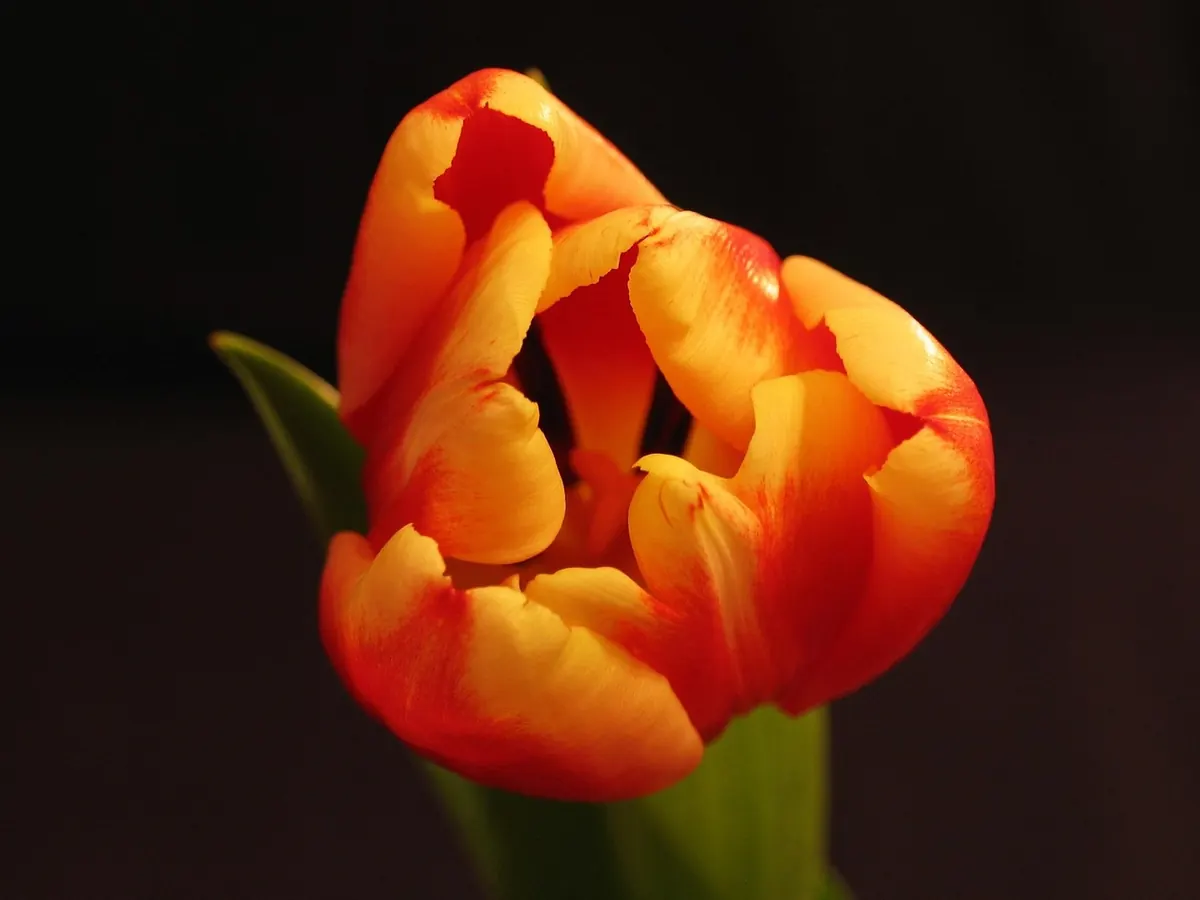
A tulip border planned in October looks very different by May, and the single-or-double decision shapes it more than any other. Singles are the classic cup on a stiff stem. Doubles are ruffled, peony-like flowers that look almost too generous for a spring bed. Neither is better than the other, but one of them will suit your garden — your soil, your wind, your cutting bucket — considerably better than the other.
Single tulips carry one row of six petals in a clean cup. In sun they open wide and show their base, which is often a contrasting blotch of yellow, white or blue. That simplicity is the point: 'Queen of Night' in near-black, 'Purissima' in soft cream, 'Apeldoorn' in scarlet with a black-and-yellow heart. They hold a crisp line, which is why they suit formal plantings, repeated blocks along a path and any scheme where the shape matters as much as the colour.
Double tulips have two or more rows of petals, tightly packed and often fringed at the edges. You rarely see a centre. 'Angelique' is the softest pink, 'Monte Carlo' a clear yellow, 'Peach Blossom' pink flushed with white, 'Black Hero' almost burgundy. On the plant they read as blowsy and romantic, closer to a peony than a tulip. Close up, a single stem is a small event. From ten metres away, it is a smudge of colour.
British springs are windy, wet and occasionally frosty well into May. This is where the two groups part company.
Singles have relatively light heads on stems that stiffen as they grow. Darwin hybrids and fosteriana types are the toughest of the lot — 'Pink Impression' and 'Orange Emperor' will ride out an April gale that flattens almost anything else. Their cups also close in dull, wet weather, so rain tends to run off rather than sit inside the flower.
Doubles carry far more petal surface. Heavy rain soaks the head, the stem kinks, and the whole flower nods towards the soil. Pale petals mark brown where they bruise, and dark varieties show every watermark. Double earlies flower in late April, often straight into unsettled weather; double lates wait until May, when conditions have usually settled and stems have had longer to thicken, which makes them the safer bet.
If your garden is exposed, treat doubles as a sheltered-site plant. Put them against a south- or west-facing wall, behind a low hedge, or in pots you can shift under cover during a storm. The one spot to avoid is the open, windswept corner where the rain comes in sideways.
Use singles as the backbone. Plant them in generous blocks of a dozen or more of one variety, and repeat the block down the border so the eye travels. Save doubles for the front edge, where their detail can actually be seen, or for a single showy pocket among wallflowers and forget-me-nots.
This is where doubles come into their own. In a pot you control the drainage, you can move the plant out of the worst weather, and the flowers sit at eye level where the ruffled petals make sense. Plant them close — around 5cm apart — in fresh peat-free compost, and water sparingly until growth appears.
Stick to singles here. Species tulips, fosteriana and Darwin hybrids are far more likely to come back year after year. Doubles tend to exhaust themselves producing that mass of petal, and many gardeners lift and bin them after flowering rather than wait for a weak second season.
Both work, but singles are easier to condition and less likely to arrive indoors bent. If you grow for the vase, plant a row of a single late variety as well as whatever doubles you fancy.
Cut tulips in the cool of the morning, when the buds are coloured but still closed. Strip the lower leaves, cut the stems on the diagonal, and stand them in deep, clean water for a few hours somewhere dark and cool before arranging. Singles will usually give you a week or more if you change the water every couple of days and keep them out of direct sun and away from the fruit bowl — ripening fruit releases ethylene, which shortens flower life.
Doubles are more temperamental. Expect five to seven days, and expect to lose a few to bruising. Their heavy heads make them top-heavy in a wide vase, so use a tall, narrow one where the stems can lean on each other, or a pin holder at the base. 'Angelique' is one of the better doubles for cutting.
Remember that cut tulips keep growing. Stems can extend by several centimetres in the vase and will lean towards the light, so arrange them a little shorter than you think you need and turn the vase daily.
If you want a spring display that copes with whatever the weather throws at it, and flowers that last in a jug on the kitchen table, plant singles. If you have a sheltered spot, a pot by the door or a border that gets a bit of protection, doubles will give you something no single tulip can match — a flower you want to lean in and look at properly.
Most gardens end up with both, and that is usually the right answer. Buy firm, large bulbs from a supplier you trust in early autumn, plant them deeper than you think you should, and give the doubles the best shelter you have. Tulip sap can irritate skin, so wear gloves if you are handling a lot of bulbs in one go.
Photo: vargazs / Pixabay
A month-by-month guide to tulip care, from choosing and planting bulbs in autumn through spring feeding...
How to combine tulips and wallflowers in a UK spring border, covering colour schemes, height layers,...
Cut tulips at the right stage, condition the stems properly and keep the water shallow, and a spring bunch...